
Services
Legacy Software is a Liability
Is Your Aging Code Devouring 60% of Your Corporate Profits?
Stop burning your baseline IT budget on brittle infrastructure.
Turn bleeding technical debt into lean, autonomous, high-margin AI workflows with a data-first, peer-to-peer blueprint built on a 25-year CEO track record of delivering hard, quantifiable ROI.
Get Your Peel & Plug Blueprint
No server logins required.
No complex NDA friction.
Peer-to-Peer Authority
A Message to CEOs from Nash Ramji
“Nash here.
My journey in software engineering didn’t start with modern, bloated cloud frameworks or VC-funded AI hype. It started many decades ago in the trenches of dBase, FoxPro, and MySQL, architecting hyper-efficient, speed-critical operating systems for capital-conscious, cost-driven businesses. When you design and customize applications in environments where every single byte, relational index, and database query directly impacts a business’s baseline survival, you develop a brutal eye for operational efficiency.
Over a quarter-century as CEO, I’ve overseen the architecture, custom rollout, and scaling of hundreds of internal systems—from complex ERPs and CRMs to tailored operating systems.
I didn’t win those contracts by talking about code; I won them by guaranteeing and delivering massive financial returns before a single line of software was even written.
Because of that ROI-first history, I don’t look at your software through the lens of trendy coding styles or superficial web wrappers. I look at it through your database schema and your Profit and Loss Statement. I know exactly where the operational bodies are buried in legacy systems because I know how old code binds your data hostage. If you are running legacy or hybrid software right now, your bottom line is actively bleeding. Let’s stop talking about technical jargon and start talking about protecting your net margins.”
3 Corporate Trap Doors
Cold Hard Truth About Your Current Options
Most corporate executives believe they have three standard paths to handle aging software. Without deep database pattern recognition and a strict eye on financial returns, all three choices turn out to be cash-flow trap doors:
Trap 1: Keep Patching the Legacy System
You burn 60% to 80% of your IT budget just keeping brittle code from fracturing under modern data loads.
This is pure, margin-eroding overhead spent on maintaining outdated data pipelines that yield zero new business value.
Trap 2: Build a “Hybrid” System (The Worst of Both Worlds)
Trying to bolt modern cloud wrappers onto an archaic database foundation.
You pay twice: maintaining the old underlying database schema plus paying for complex integration glue that constantly breaks and leaks profit.
Trap 3: The “AI Code Trap” (The Newest Illusion)
Allowing developers to use AI coding assistants to write custom code 5x faster.
Stop right away.
Writing more manual lines of code multiplies future technical liabilities and ties your operating expenses to unpredictable, skyrocketing compute bills.
Solution
Shift: From Rigid Code to Intent
We don’t use AI to write more code.
We use AI to stop writing rigid code entirely.
Traditional development shops pump out manual software faster—leaving you with a massive bill to maintain future technical debt.
Instead, our approach utilizes Intent-Driven Architecture.
Drawing from decades of experience optimizing foundational database architectures for hyper-efficient business returns, we pinpoint exactly where brittle, hard-coded logic can be safely extracted from your data layers.
In its place, we deploy fluid, highly autonomous agents running natively on secure, serverless environments.
100% Data Integrity: Locked down by strict, non-AI deterministic data guardrails rooted in absolute database logic to ensure zero security leaks or AI hallucinations.
Zero Software Maintenance Tax: Lean, automated workflows that interact directly with your data, adapting fluidly to shifting business rules for pennies.
Engineered for Hard ROI: We target immediate, measurable cost-reductions. Industry data shows a true legacy-to-AI operational transition yields an average 120 % Return on Investment (ROI).
Offer & Process
Compute & Logic Micro Audit
Investment: Can $770 + tax
Stop guessing what your legacy architecture is costing your business.
This is a streamlined, peer-to-peer diagnostic process explicitly mapped out to uncover structural software liabilities and data bottlenecks—without the traditional IT friction, long meetings, or internal pushback:
Step 1: Secure Intake -> A brief, highly targeted questionnaire to isolate your single top data bottleneck and current cloud infrastructure spend.
Step 2: Context Call -> A 30-minute Zoom session to map workflow friction, legacy liabilities, and immediate cost-saving opportunities.
Step 3: Alignment Session -> A 30-minute strategy review to deliver your actionable “Peel & Plug” Blueprint.
Deliverable:
You will receive a precise, actionable “Peel & Plug” Blueprint showing you exactly how to wall off that one bleeding operational ulcer, bypass your legacy dependencies, liberate your data, and permanently secure your net margins.
Risk Reversal
2x Direct Financial Guarantee
This engagement requires a fixed investment of Can $770 + tax.
Because my entire career has been built on proving the financial returns of software customization before asking clients to commit big budgets, I back this audit with an absolute guarantee:
If I cannot identify at least 2x the cost of this audit (Can $1,540+) in immediate infrastructure waste, hidden database leaks, or legacy engineering liabilities from that single bottleneck, the audit is entirely free. I will refund your investment.
Secure Your Net Margins Today.
Schedule your peer-to-peer Profit Alignment Audit with Nash Ramji.
Nash Ramji
Legacy Data Architect, AI Business Architect & Former 25-Year IT Software CEO
Specialty: Converting legacy database and software liabilities into high-margin, serverless AI infrastructure.
Website: AiArchitect.ca
Email: NashRamji@gmail.com
Phone: 604-525-2188 — Please text for priority scheduling
Part 1: The AI Agent Revolution.
Imagine intelligent agents as the central nervous system of your business, seamlessly automating tasks and optimizing workflows.
This isn’t science fiction; it’s the future. Powered by AI and machine learning, agents learn, adapt, and make autonomous decisions, integrating with various systems and processing data without human intervention.
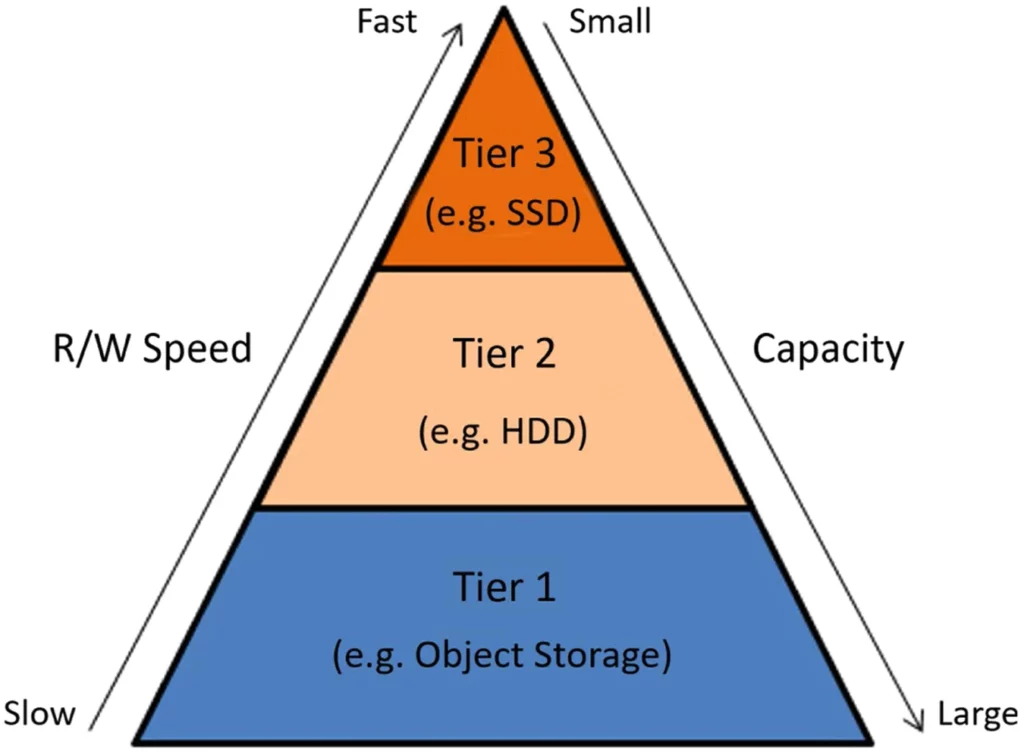
Picture a three-tiered agent-centric cloud:
A Data Core as the single source of truth, an Agent Network and Console for orchestration, and an Interaction Layer for seamless communication.
This model offers unprecedented agility, enhanced automation, improved decision-making, reduced costs, and a superior customer experience.
The shift from traditional software to an agent-centric architecture is a paradigm shift.
Embracing this change is crucial for businesses aiming to thrive in tomorrow’s competitive landscape.
The future belongs to those who harness the power of the agent.
Key responsibilities of AI business architect
An “AI business architect” for small and medium businesses (SMBs) is a professional who specializes in designing and implementing artificial intelligence (AI) solutions tailored to the specific needs of smaller companies, aligning AI technology with the business strategy to optimize operations, improve decision-making, and drive growth, while considering the unique constraints of an SMB’s size and budget.
Key responsibilities of an AI business architect for SMBs:
Identifying suitable AI use cases:
Analyze business processes and identify areas where AI can add significant value, like customer service automation, sales forecasting, inventory management, or marketing personalization.
Data assessment and preparation:
Evaluate the quality and accessibility of existing data to determine if it's suitable for AI modeling and guide data collection strategies if needed.
Selecting appropriate AI tools and platforms:
Choose user-friendly AI solutions that are scalable and fit within an SMB's budget, considering cloud-based options and readily available APIs.
Developing AI implementation roadmap:
Create a clear plan for integrating AI into existing systems, including project timelines, resource allocation, and potential risks mitigation.
Collaborating with stakeholders:
Work closely with business leaders, IT teams, and data analysts to ensure alignment between business goals and AI development.
Monitoring and evaluating AI performance:
Track key metrics to measure the effectiveness of implemented AI models and make necessary adjustments to optimize results.
How an AI business architect differs for SMBs:
Focus on practical applications:
Prioritize AI solutions that deliver immediate, tangible value to the business rather than complex, research-oriented projects.
Simplified architecture:
Design AI systems that are easy to understand and manage for non-technical users, often leveraging pre-built models and readily available tools.
Cost-effectiveness:
Identify cost-efficient AI solutions, considering scalable models and cloud-based services to minimize upfront investments.